―
What Is the International Rule of Law?
Understanding the International Rule of Law and International Law in 2026
―
Now, imagine a football match.
In the middle of the game, the strongest player commits a foul. Then, without hesitation, he declares...
“I don't agree with this rule, so I'm going to keep playing.”
He ignores the referee's decisions, picks and chooses which rules apply to him, and demands that only his opponents follow the rules.
What would happen?
At that moment, the game would stop being a sport and turn into a simple contest of power. That's what happens when there's no referee on the football field or when there is one, but nobody listens.
Now, let's imagine that football field on a global scale.
Nearly 200 countries share this planet. They trade goods, travel across borders, and sometimes come into conflict.
But in this enormous playing field, there is no referee.
To be more precise, there is no powerful referee who can immediately stop and punish a country for breaking the rules.
So a natural question arises:
What happens when a powerful country declares, “I'm not going to follow the rules,” and there's no referee to stop it?
United Nations Secretary-General António Guterres addressed this very concern at a UN Security Council meeting in January 2026.
“Across the globe, the rule of law is being replaced by the law of the jungle.”
Just like the player who committed a foul earlier, more and more countries are choosing to follow the rules only when it suits their interests.
But in October of that same year, one name brought the question of this “playing field without a referee” back into the international spotlight.
Navi Pillay, an international judge from South Africa.
An 85-year-old legal expert who presided over trials related to the Rwandan genocide and served as the United Nations High Commissioner for Human Rights, she was announced as the 2026 Nobel Peace Prize laureate.
A Peace Prize for a judge who has spent her life in court? It might seem a little surprising.
But the answer lies in today's increasingly troubled international community.
At a time when wars and conflicts are on the rise, and even international courts face political pressure, the choice served as a reminder that the power to resolve disputes without violence ultimately comes from international law.
But without a referee, can international law really be called “law”?
To understand this, we first need to explore the concept of the International Rule of Law.
And we'll also look at why upholding these rules is directly connected to peace for all of us.
[International Rule of Law]
The principle that all countries, whether powerful or weak, must follow the same rules.
It means that countries cannot simply pick and choose which rules to follow or ignore those that work against their interests. When disputes arise, they must be resolved through peaceful means rather than force.
Put simply, it comes down to this:
The idea is not that powerful countries get to make their own rules, but that the law must apply even to the most powerful countries.
This story of a “playing field without a referee” is not limited to war.
It also applies to sharing the oceans peacefully, protecting diplomats, trade, climate change, and refugee issues...
Wherever countries work together across borders, the same need for a referee arises.
International law is like the invisible infrastructure that holds this enormous playing field together, preventing it from falling apart day after day.
▲ [Video Coming Soon] This Sunhak Peace Prize video introduces the concept of the International Rule of Law.Source: Sunhak Peace Prize Official YouTube Channel
―
No Police, Yet This Is Still Law?
Three Sources of International Law
―
Let’s take a moment to look at how things work within a country.
Within a country, parliament makes the laws, courts interpret and apply them, and the police enforce them. In a sense, these three institutions share the role of the referee.
But the international community works very differently.
Instead of having a single central government impose laws from above, countries create their own rules by entering into treaties and establishing long-standing practices over time.
According to Article 38 of the Statute of the International Court of Justice, the main sources of international law can be divided into three categories.
▲ Source: Article 38 of the Statute of the International Court of Justice; UN Audiovisual Library of International Law
Enforcement is not concentrated in one place, either.
Instead, multiple mechanisms work together: international courts and arbitration, diplomatic pressure, economic sanctions, rulings by domestic courts, and reciprocity between states.
Countries that break their promises often lose trust, making it harder to secure cooperation from others in future negotiations.
That is why, in the international community, international law is seen not so much as “a useless set of rules because there is no police force to enforce them,” but rather as a body of law collectively upheld by states, courts, international organizations, and civil society.
It may be slow and imperfect, with plenty of gaps. But it is certainly different from a world with no rules at all.
―
A Promise the World Made 80 Years Ago
Four Fundamental Principles of the United Nations Charter
―
The history of international law goes back much further than the founding of the United Nations.
But if we had to choose one document that laid the foundation for today's international order, it would be difficult to overlook the United Nations Charter of 1945.
Why 1945?
Only after experiencing two world wars did countries come to recognize that they could no longer accept a world order in which “being powerful meant having the right to cross another country's borders.”
That is why they clearly set out the basic principles governing relations between states in Article 2 of the UN Charter.
Four Key Principles to Remember from the UN Charter
1. Sovereign Equality
Regardless of differences in territory, population, or military power, all UN Member States are legally equal in sovereignty.
2. Fulfilling Obligations in Good Faith
Countries cannot simply abandon their commitments because those commitments have become inconvenient or disadvantageous. This is explained by the principle of pacta sunt servanda, meaning “agreements must be kept.”
3. Peaceful Settlement of Disputes
Countries must seek to resolve disputes through peaceful means such as negotiation, inquiry, mediation, conciliation, and international judicial proceedings rather than resorting to force.
4. Prohibition of the Threat or Use of Force
The use of force against another state's territorial integrity or political independence is generally prohibited. Only limited exceptions are recognized under the UN Charter, such as the exercise of the right of self-defense or authorization by the UN Security Council.
This was also the provision the international community first turned to when Russia invaded Ukraine in 2022.
These four principles may sound like grand diplomatic language, but they are actually quite simple.
They essentially mean:
“Don’t resort to violence first, keep your promises, and when disputes arise, resolve them through dialogue and established procedures.”
In other words, what we consider basic common sense in our own communities becomes international law when applied to relations between countries.
One important point to remember is that, for smaller countries, international law is not merely an option. It is a safety net.
When they cannot stand up to stronger nations through military power, the principles of sovereign equality and territorial integrity become their last line of defense.
For powerful countries, on the other hand, international law serves as a guardrail, marking “the limits of what is permitted.”
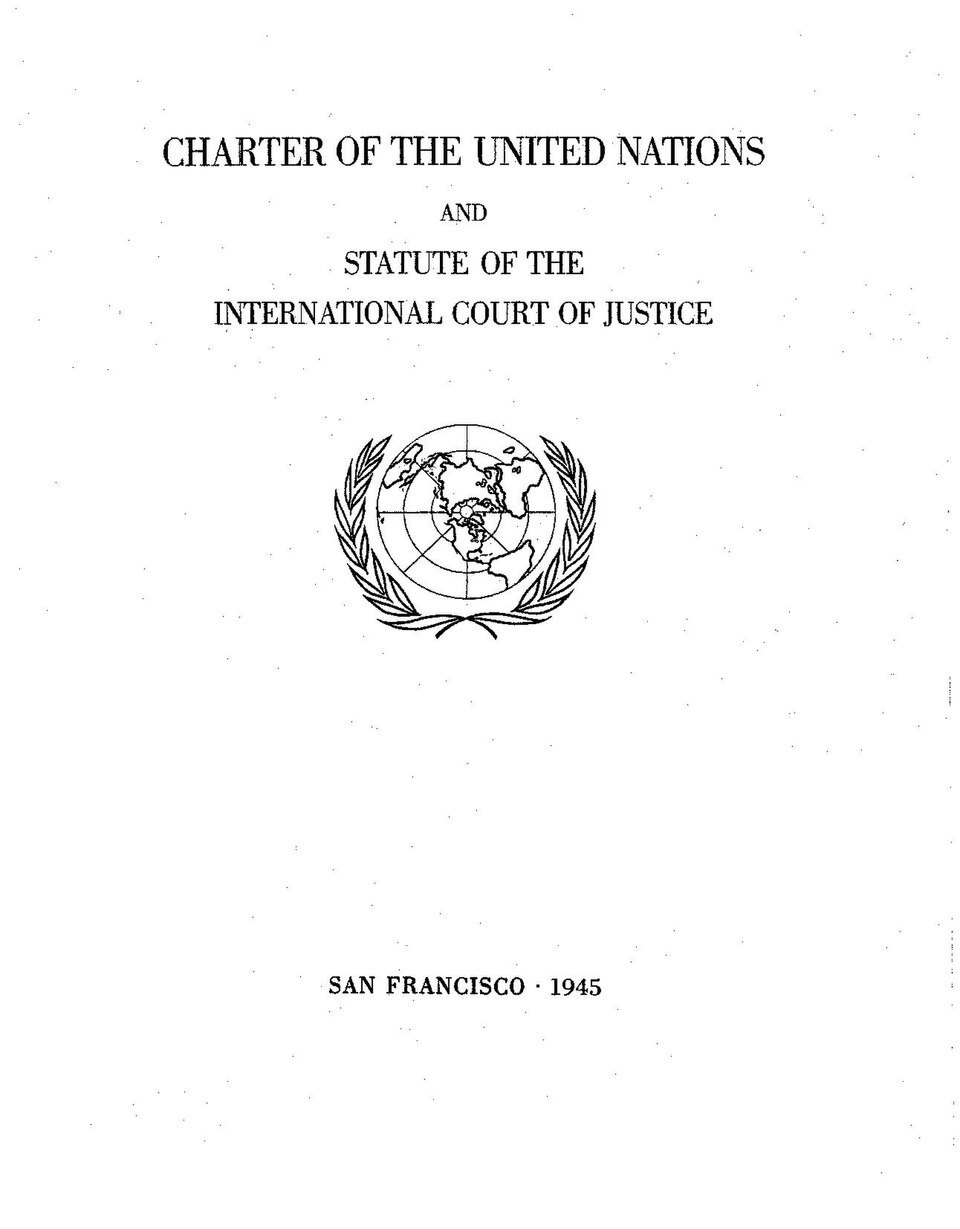
▲ On June 26, 1945, representatives from 50 countries signed the United Nations Charter in San Francisco, United States, pledging to resolve disputes peacefully and restrict the use of force.Source: Wikisource
―
The Story of David Taking Goliath to Court
A Real Case Before the International Court of Justice (ICJ)
―
“So, has international law ever actually prevented war or genocide?”
This is probably the question you're most curious about.
Let me introduce you to a case that has yet to reach its final conclusion — which makes it all the more compelling.
In May 2018, Abubacarr Tambadou, the Minister of Justice of The Gambia, a country in West Africa, visited a refugee camp in Bangladesh.
Endless rows of tents stretched before him, filled with Rohingya refugees whose eyes told stories of suffering.
Tambadou had previously worked as a prosecutor at the International Criminal Tribunal for Rwanda. He already knew what genocide looked like.
The Gambia is a small country with a population of just over 2.8 million. It had no direct connection to the Rohingya people.
And yet, as soon as Tambadou returned home, he made a decision.
He would take Myanmar to the International Court of Justice.
It was like the story of David and Goliath.
But this time, David's weapon was not a slingshot.
It was international law.
In 2017, military operations in Myanmar's Rakhine State forced more than 740,000 Rohingya people to flee to Bangladesh.
With the support of the 57 member states of the Organisation of Islamic Cooperation (OIC), The Gambia filed a case against Myanmar at the International Court of Justice in November 2019.
Even though The Gambia itself had not been directly harmed.
Its legal argument rested on one principle:
As a party to the Genocide Convention, a country has the right to challenge another party's violation of the Convention.
But there is another fascinating connection hidden in this courtroom.
At the International Court of Justice, a party to a case that does not have a judge of its nationality on the bench may appoint a judge ad hoc.
And the person The Gambia nominated for this position was none other than Navi Pillay.
Tambadou had served as a prosecutor at the International Criminal Tribunal for Rwanda since 2003, while Pillay had been the President of that same tribunal until shortly before then.
Two legal professionals who had already confronted genocide in court were now facing the same case once again.
This time, one was helping lead the legal proceedings, while the other sat on the judicial bench.
Quite a remarkable connection, isn't it?
▲ As of October 2026, The Gambia v. Myanmar is still awaiting a final judgment. It is an unusual case in the history of the International Court of Justice (ICJ), in which one country brought a case against another over human rights violations that did not directly affect it.
Source: International Court of Justice, Case No. 178; Dhaka Tribune(2026.8.28)
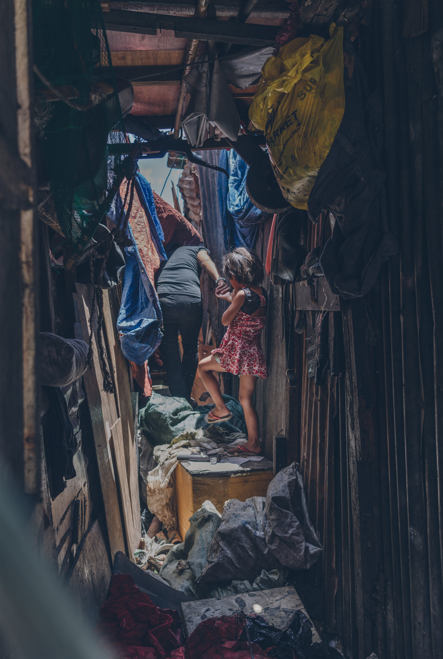
Perhaps the fact that the judgment has yet to be delivered is the very heart of this story.
After all, justice does not come overnight.
And yet, for eight years, one small country with a population of just 2.8 million has stood before one of the world's most important courts, fighting for some of the world's most vulnerable people.
The law does not create peace on its own simply by delivering a judgment. Ultimately, it is someone's unwavering determination that turns the path toward peace into a journey actually taken.
―
If You Pick and Choose the Rules, They Are No Longer Rules
The Selective Application of International Law
―
When viewed in isolation, a violation of international law may seem like nothing more than “one country breaking the rules.”
But when violations happen repeatedly, and double standards begin to pile up with leniency toward allies and strict enforcement against rivals — the story changes completely.
Imagine parents who always scold their older child but let the younger one get away with everything.
Would the children really believe that the household rules apply equally to everyone?
Probably not.
The same is true in relations between countries.
Four Cracks Created by Selective Enforcement
1. Setting a Dangerous Precedent
When a violation is tolerated once, other countries may use it as a justification for similar actions.
2. Undermining the Value of Commitments
If treaties and court rulings cannot be trusted, cooperation on disarmament, climate change, trade, and pandemic response can also be undermined.
3. Putting Smaller Countries at Greater Risk
In a world where military and economic power, rather than law, determine the rules, smaller countries find their options rapidly shrinking.
4. Disrupting the Everyday Lives of Civilians
The destruction of hospitals, schools, and drinking water facilities, along with the obstruction of humanitarian aid, is not an abstract legal debate. It is a matter of human lives and livelihoods.
Recently, cases like these have become increasingly common.
In 2025, the number of interstate armed conflicts reached eight, doubling in just one year. Meanwhile, state-based armed conflicts totaled 65, the highest number recorded since data collection began in 1946 (PRIO, 2026).
In late February 2026, Israeli and U.S. airstrikes killed Iran's Supreme Leader, prompting Iran to retaliate by moving to block the Strait of Hormuz.
The Elders, a group of senior global leaders founded by Nelson Mandela, warned that “major powers are flouting the international rule of law.”
▲ Interstate armed conflicts doubled from 2024 to 2025, while state-based armed conflicts reached 65, the highest number ever recorded since data collection began.출처: PRIO, Conflict Trends: A Global Overview, 1946–2025 (2026)
If we had to sum up the essence of the international rule of law in one word, it would be consistency.
When the standards change depending on which country breaks the rules, the law begins to look less like a set of shared principles and more like a diplomatic weapon.
Trust in the law begins not with court judgments, but with the commitment to applying the same standards to everyone.
―
So Who Enforces the Law — and Who Makes the Arrests?
The Difference Between the International Court of Justice (ICJ) and the International Criminal Court (ICC)
―
When we talk about international law, this is often the first question that comes to mind.
“So who puts countries on trial, and who actually makes the arrests?”
There is no single answer, because different international institutions serve very different roles.
▲ International Court of Justice (ICJ)
The ICJ handles legal disputes between states. It hears cases when states have accepted its jurisdiction, and its judgments are binding on the parties involved in each case. It is not a criminal court that sends individuals to prison.
▲ International Criminal Court (ICC)
The ICC deals with individuals responsible for genocide, crimes against humanity, war crimes, and the crime of aggression.
The general principle is that national courts have primary responsibility for prosecuting these crimes. The ICC steps in as a court of last resort when a state is genuinely unwilling or unable to investigate or prosecute them.
▲ United Nations Security Council
The UN Security Council can make binding decisions on matters of international peace and security, impose sanctions, and authorize the use of force under the UN Charter.
However, the veto power of its permanent members can sometimes prevent the Council from taking action.
▲ National Courts
National courts can prosecute international crimes under domestic law.
Some countries can also prosecute serious international crimes that have little direct connection to their own territory or citizens, to the extent permitted by their domestic laws.
Russia's invasion of Ukraine offers a clear example of how these institutions differ.
The ICJ examines questions concerning violations of the Genocide Convention, while the ICC deals with individual war crimes, such as the forcible transfer of children.
However, because there was no court specifically established to prosecute “the act of aggression itself,” Ukraine and the Council of Europe agreed to establish a new Special Tribunal for the Crime of Aggression and are now moving forward with the process of setting it up.
But neither court has its own police force.
They can deliver judgments and issue arrest warrants, but actually arresting individuals and ensuring compliance with their decisions ultimately falls to individual states.
It is like a referee who can show a red card, but can only get the player off the field if everyone respects the decision.
―
When You See These Terms in the News, Here's How to Understand Them
How to Read News About International Law
―
When reading news about wars and international trials, you may come across terms like “illegal,” “war crimes,” “judgment,” and “arrest warrant.”
All of these terms are important, but they carry different legal weight.
Just remembering the following three questions can help you understand the news much more clearly.
Three Questions to Ask When Reading News About International Law
1. Which Rule Is at Issue?
First, identify whether the issue concerns the legality of the use of force, international humanitarian law protecting civilians, obligations under human rights treaties, or obligations under specific treaties.
2. Who Made the Determination, and in What Legal Form?
A government's claim, an investigative body's report, an arrest warrant, provisional measures, and a final judgment are not the same thing. It is also essential to distinguish between allegations and a final determination of guilt.
3. Are the Same Standards Applied to All Parties?
Consider whether you are applying the same principles to countries you support and those you oppose. Trust in international law begins with consistency.
You may also hear people say, “International law is violated so often that it's useless.”
But just because crimes occur within a country doesn't mean we no longer need criminal law.
The value of law does not lie in ensuring that violations never happen.
It lies in establishing what is wrong, protecting victims, and providing a standard for holding those responsible accountable.
Two Pillars for Rebuilding International Law
1. What the International Community Must Do
Apply the same standards to all countries, whether allies or adversaries. Respect the judgments of international courts and cooperate with investigations into international crimes.
2. What Citizens Can Do
Check the facts first, rather than taking sides. And apply the same standards to countries we support and those we oppose.
―
Ultimately, a Promise to Pass On to Future Generations
The Future of the International Rule of Law
―
Finally, there is one thing I would like to leave you with.
We do not need international law because it is perfect.
Nor would something better necessarily take its place if international law were to disappear.
More often than not, that void would be filled by power, retaliation, and fear.
A rule ignored by one country today could become a rule that another country ignores when dealing with us tomorrow.
Conversely, a boundary upheld today could one day become the line that protects hospitals and schools, and saves the lives of prisoners of war and civilians in future conflicts.
Perhaps that was ultimately the question Tambadou confronted when he visited the refugee camp that day.
“Shouldn't someone speak up?”
And perhaps it was that same question that led Pillay, who once judged cases of genocide at the Rwanda tribunal, to continue serving in a courtroom in The Hague, even at the age of 85.
The international rule of law must not remain merely a complicated legal concept. It is a promise to pass on to future generations a world where the law governs power, rather than one where power overrides the law.
But perhaps, by demanding that the same standards apply to everyone, we are all sharing a small part of that referee's responsibility.
Written by Sharon Choi
Director of Planning
Sunhak Peace Prize Secretariat
References & Sources
1. United Nations, What is the Rule of Law
2. United Nations, Charter of the United Nations
3. UN Secretary-General, Remarks on Reaffirming the International Rule of Law (2026.1.26)
4. UN Audiovisual Library of International Law, Statute of the International Court of Justice
5. UN Audiovisual Library of International Law, Vienna Convention on the Law of Treaties
6. International Court of Justice, The Gambia v. Myanmar — Case No. 178
7. Human Rights Watch, Developments in The Gambia's Case Against Myanmar
8. PRIO, Conflict Trends: A Global Overview, 1946–2025 (2026)
9. International Court of Justice, How the Court Works
10. International Criminal Court, ICC Mandate and Core Crimes
11. International Criminal Court, Complementarity and State Cooperation
14. Council of Europe, Special Tribunal for the Crime of Aggression against Ukraine
16. NPR, South African human rights lawyer Navi Pillay wins the Nobel Peace Prize (2026.10.9)
18. Dhaka Tribune, Rohingya genocide case: ICJ verdict expected in October (2026.8.28)
19. IRMCT, Registrar Abubacarr M. Tambadou — Biography
20. World Bank (via FRED), Population, Total for The Gambia (2025)
-
PREV What Is Multilateralism?
-
NEXT No next post.