―
What Is the Treaty on the Prohibition of Nuclear Weapons (TPNW)?
Understanding the Treaty on the Prohibition of Nuclear Weapons
―
At midnight on February 5, 2026, an agreement quietly expired. It was New START, the treaty that had placed limits on the number of nuclear weapons held by the United States and Russia.
Think of it like a subscription service ending without renewal. Except this time, it wasn't a music app that stopped working. It was the brakes that had been placed on the world's two largest nuclear arsenals.
"There are now no guardrails on the size of the US and Russian strategic nuclear arsenals. For the first time in decades."
— Christine Wormuth, President of the Nuclear Threat Initiative (NTI) · NPR(2026.2)
So does this mean there are no rules left to prevent nuclear weapons?
Not quite. There is already a treaty under which 75 countries have pledged that nuclear weapons themselves are illegal. It is called the Treaty on the Prohibition of Nuclear Weapons (TPNW).
Here's a quick quiz.
Of biological weapons, chemical weapons and nuclear weapons, which were the last to be comprehensively prohibited under international law?
The answer is nuclear weapons.
An international convention banning biological weapons was established in 1972, followed by one banning chemical weapons in 1993. Yet it was not until 2017 that humanity's most destructive weapons finally became the subject of a prohibition treaty.
And from November 30 to December 4 this year, the treaty's first Review Conference will take place at United Nations Headquarters in New York.
Five years after the treaty entered into force, countries will gather for the first time to ask a fundamental question: "Is this treaty actually working?"
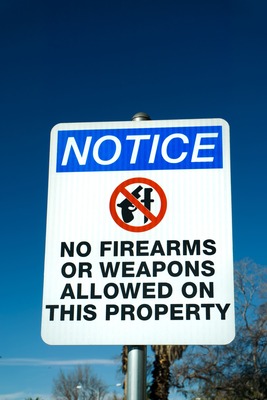
[Treaty on the Prohibition of Nuclear Weapons (TPNW)]
The Treaty on the Prohibition of Nuclear Weapons (TPNW) is an international treaty that comprehensively prohibits the development, testing, production, possession, transfer and use of nuclear weapons, as well as threats to use them.
In simple terms, it is a treaty that makes nuclear weapons illegal to possess in the first place.
The treaty was adopted at the United Nations on July 7, 2017, with 122 countries voting in favour. After 50 countries had ratified it — meaning they had formally approved the treaty through their domestic procedures — it entered into force on January 22, 2021.
The list of prohibitions is extensive. The message is clear: Don't make them, don't possess them, don't transfer them, and don't threaten to use them. The treaty also prohibits countries from allowing another country's nuclear weapons to be stationed on their territory.
Think of an airport security checkpoint.
Until now, nuclear weapons had been treated like dangerous items that could be carried as long as they were handled carefully. The TPNW effectively places them on the prohibited items list.
It is no longer a matter of carrying them with caution. The message is simple: Don't bring them in at all.
▲ A Sunhak Peace Prize video explaining what the Treaty on the Prohibition of Nuclear Weapons (TPNW) prohibits and how it differs from existing treaties.Source: Sunhak Peace Prize Official YouTube Channel
―
How Is It Different from the Nuclear Non-Proliferation Treaty (NPT)?
Understanding the Difference Between the NPT and the TPNW
―
"Wasn't there already a treaty on nuclear weapons?"
Yes, there was.
The Treaty on the Non-Proliferation of Nuclear Weapons (NPT) was established in 1968.
How the Two Treaties Approach Nuclear Weapons
NPT (1968)
Recognises the existing nuclear arsenals of five countries
↓
Prevents additional countries from acquiring nuclear weapons
↓
Requires nuclear-weapon states to pursue disarmament efforts
↓
Nuclear Weapons = Weapons to Be Controlled
TPNW (2017)
Applies equally to all countries that join the treaty
↓
Prohibits the possession of nuclear weapons altogether
↓
Requires nuclear-armed countries that join to eliminate their nuclear weapons
↓
Nuclear Weapons = Prohibited Weapons
▲ While the NPT is a commitment to "prevent nuclear weapons from spreading further," the TPNW is a commitment to "eliminate them altogether." The two treaties are generally described as complementary rather than replacements for one another.Source: Adapted from materials published by NTI, UNODA
Think of it as a classroom. Five students already have mobile phones. Under the NPT's rules, "No one else is allowed to buy a phone, while the five who already have one must work towards reducing their numbers someday." But more than 50 years have passed, and that "someday" has yet to arrive.
So the other students decided to create a new rule of their own: "No mobile phones in the classroom at all."
That's the idea behind the TPNW.
For reference, the NPT recognises five nuclear-weapon states: the United States, Russia, the United Kingdom, France and China. With India, Pakistan, North Korea and Israel also possessing nuclear weapons, the number of countries currently believed to have nuclear arsenals stands at nine.
―
A Treaty Driven by Citizens, Not World Powers
ICAN and the Humanitarian Disarmament Movement
―
Here, the story takes an unexpected turn. The driving force behind this treaty was not the governments of major powers.
At the heart of the movement was the International Campaign to Abolish Nuclear Weapons (ICAN), a coalition of civil society organisations launched in Australia in 2007.
Bringing together organisations from around 100 countries, the network changed the very question being asked.
Instead of asking, "Are nuclear weapons necessary for national security?", it asked:
"What happens to people when a nuclear weapon explodes?"
This is known as the humanitarian approach. And when you change the question, the answer changes too.
It became clear that no hospital, fire service or humanitarian relief organisation could cope with the devastation caused by a nuclear explosion.
Between 2013 and 2014, a series of international conferences examining the humanitarian consequences of nuclear weapons took place in Norway, Mexico and Austria. The momentum generated by these meetings eventually led to negotiations on the treaty.
This is also why ICAN was awarded the 2017 Nobel Peace Prize.
The Nobel Committee recognised its efforts to draw global attention to the catastrophic humanitarian consequences of nuclear weapons and to achieve their prohibition through an international treaty.
―
100 Countries Have Signed On, but Not a Single Nuclear-Armed State
Participation in the Treaty on the Prohibition of Nuclear Weapons and Its Limitations
―
So, how many countries are now part of the treaty?
On July 7, 2026, the ninth anniversary of the treaty's adoption, the Pacific island nation of Tonga joined the treaty.
This brought the number of States Parties to 75, with another 25 countries having signed but not yet ratified it.
Together, that makes 100 countries — more than half of the United Nations' 193 member states.
▲ Figures as of July 2026, following Tonga's accession. None of the world's nine nuclear-armed states have joined the treaty.Source: ICAN(2026.7.7), Arms Control Association(2025.11)
A treaty without the nine countries that matter most.
Can it really make a difference?
This is arguably the TPNW's greatest limitation. None of the nine nuclear-armed states have joined the treaty, and many of their allies have stayed out as well.
South Korea and Japan, both under the US nuclear umbrella, and member states of the North Atlantic Treaty Organization (NATO) have also declined to join.
As a result, opinions are divided over whether the treaty can truly be effective.
▲ Source: Adapted from materials published by NTI
Supporters of the treaty often point to another example. The conventions banning anti-personnel landmines and cluster munitions also began without the participation of some major powers. Yet they are widely credited with helping establish the norm that these are "weapons that must not be used."
Think of smoking. There was a time when people could smoke even on aeroplanes. But as smoke-free rules were introduced and the idea that "smoking is not allowed here" became widely accepted, people's behaviour began to change.
―
The Doomsday Clock: 85 Seconds to Midnight
Nuclear Threats and the Crisis of Arms Control in 2026
―
Yet the world now seems to be moving in the opposite direction.
According to the Stockholm International Peace Research Institute (SIPRI), there were approximately 12,187 nuclear warheads worldwide as of January 2026. Of these, an estimated 2,100 were on high operational alert, mounted on ballistic missiles and ready to be launched at short notice.
Think of a car sitting with its engine running, ready to move at any moment.
SIPRI warned that as the dismantling of nuclear weapons slows and new deployments accelerate, the total number of nuclear warheads is likely to rise again.
This year has also seen the brakes restraining nuclear weapons come off, one after another.
▲ As international arms control mechanisms weaken, the TPNW is preparing to hold its first Review Conference.Source: NPR, Nippon.com·지지통신(2026.5.23), SIPRI(2026.6.8)
One indicator that captures these developments at a glance is the Doomsday Clock. It is a symbolic clock that represents humanity's proximity to catastrophe, with "midnight" marking the moment of global destruction.
The clock was originally created to warn of the dangers of nuclear weapons. Scientists who had worked on the development of the atomic bomb founded the Bulletin of the Atomic Scientists to raise awareness of the threat of nuclear war, and introduced the clock in 1947.
Today, the clock also takes into account threats such as climate change and artificial intelligence (AI). But nuclear weapons remain one of the key factors determining the position of its hands.
▲ The Doomsday Clock is updated annually by the Bulletin of the Atomic Scientists. In January 2026, it was set at 85 seconds to midnight, the closest it has ever been to catastrophe.Source: Bulletin of the Atomic Scientists announcement (summarised by Nukewatch)
The Doomsday Clock began at seven minutes to midnight in 1947 and moved back to 17 minutes in 1991, as the Cold War came to an end. By 2026, however, it had reached just 85 seconds to midnight.
In the very year that the clock has moved closer to midnight than ever before, the TPNW is holding its first Review Conference, five years after entering into force.
With arms control mechanisms weakening one after another, the conference will provide the first opportunity to assess whether the treaty is fulfilling its intended role. This has drawn particular attention to the upcoming meeting, which will be chaired by South Africa.

(AI-generated image.)
―
A World Without Nuclear Weapons: What Can We Do?
The TPNW and the Role of the International Community and Citizens
―
Nuclear disarmament does not happen solely at the negotiating tables of world leaders. After all, the TPNW itself was born from a question raised by ordinary citizens.
① What the International Community Can Do
1. Make the Review Conference a Platform for Progress
Countries should work to expand participation in the treaty and develop concrete plans to assist victims of nuclear testing and nuclear weapons use, as well as to remediate contaminated areas, as outlined in Article 6 of the TPNW.
2. Put the Brakes Back on the Nuclear Arms Race
Nuclear-armed states must fulfil their disarmament obligations under Article VI of the NPT and begin new arms control negotiations following the expiration of New START.
3. Join the Dialogue, Even as an Observer
Countries that have not joined the treaty can still attend Meetings of States Parties as observers. At the first Meeting of States Parties in 2022, NATO members such as Germany and Norway participated as observers.
② Three Things We Can Do
1. Find Out Where Your Country Stands
Check whether your country has joined the TPNW and explore the reasons behind its decision. You can find country-by-country information on the ICAN website.
2. Understand the Arguments on the Other Side
"Nuclear deterrence keeps the peace" versus "Nuclear weapons themselves are a threat." By first examining the arguments that challenge your own views, you can develop a more nuanced understanding of the news.
3. Follow the Review Conference Starting November 30
When you come across the term TPNW in international news, don't just scroll past it. Take a closer look at what countries have agreed on and where negotiations have reached an impasse.

―
If the Law Changes First, Will the World Follow?
The Treaty on the Prohibition of Nuclear Weapons and Future Generations
―
On that night in February 2026, one of the brakes restraining nuclear weapons quietly came off. Yet elsewhere, the number of countries committed to building a new set of brakes together had grown to 100.
Slavery, chemical weapons, anti-personnel landmines. Practices and weapons once defended as "unavoidable realities" eventually became illegal. And change always began with people who were willing to say, "This is wrong."
The TPNW has yet to persuade nuclear-armed states to change course. But by beginning to redefine nuclear weapons from "something countries are allowed to possess" to "something that must be eliminated," it has already turned a page in history.
. . . . .
The next page belongs to future generations, who should never have to inherit a world of nuclear weapons.
Written by Sharon Choi / Director of Planning / Sunhak Peace Prize Secretariat
Further Readings
References & Sources
1. NPR, For the first time in decades, the U.S. and Russia have no limits on nuclear weapons (2026.2)
2. UNODA, Treaty on the Prohibition of Nuclear Weapons — Treaty overview
3. ICAN, Tonga becomes 100th country to join UN Nuclear Ban Treaty (2026.7.7)
4. Arms Control Association, Nuclear Ban Treaty Crosses Majority Threshold (2025.11)
5. ICAN, TPNW First Review Conference, 30 November – 4 December 2026
6. NTI, Treaty on the Prohibition of Nuclear Weapons (TPNW)
7. Hiroshima Prefecture, Status of the Treaty on the Prohibition of Nuclear Weapons
8. SIPRI, SIPRI Yearbook 2026 (2026.6.8)
9. Nippon.com, NPT Review Conference Ends without Final Document (2026.5.23)
10. Nukewatch, It is now 85 seconds to midnight (Bulletin of the Atomic Scientists 2026 발표)
-
PREV What Is COP (Conference of the Parties)?
-
NEXT No next post.