
―
What Is Gender Activism?
When one person’s grief becomes the language of the world
―
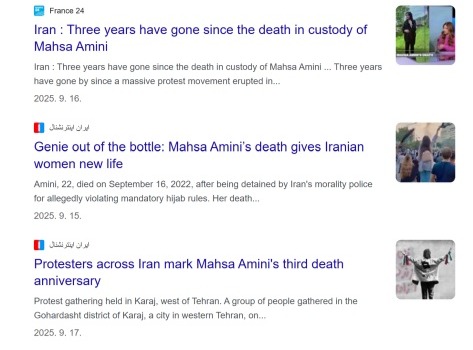
In September 2022,
a young woman in Iran was taken into police custody and never returned.
Her name was Mahsa Amini, twenty-two years old.
Her “offense” was not wearing her hijab properly.
And just days later, people took to the streets.
Some cut their hair.
Some removed their hijabs and held them up.
And they chanted:
“Zan, Zendegi, Azadi.”
Woman, Life, Freedom.
Soon, these words were translated into other languages, echoing through the streets of London, New York, Berlin, and Seoul.
People began to say:
“This is not just Iran’s problem.”
The grief of one individual became a public question, a voice in the streets, and eventually, part of our everyday language.
That very process is one scene of what we call gender activism.
If you would like to learn more about the state of women’s rights in the Arab world, please refer to the following article! ⇊ |
―
What Is Gender Activism?
“Not a Grand Flag, but a Moment of Pause”
―
In reality, gender activism does not begin with grand declarations or loud movements.
It begins with small questions:
“Something feels off.”
“Why is this considered normal?”
Standing still for a moment in front of everyday scenes of gender inequality, and choosing to question them,
that is the starting point of gender activism.
Adding a widely recognized definition makes this even clearer.
European Institute for Gender Equality(EIGE) defines gender equality as:
“Equal rights, responsibilities, and opportunities for women and men, girls and boys.”
In that sense, gender activism is the effort to move this idea from a textbook slogan into a rule of reality.
“Why are people paid differently for the same work?”
“Why do the faces at decision-making tables always look the same?”
Gender activism is about transforming structures that silence people into systems where voices can be heard.
It is the act of turning questions into the language of society and pushing institutions and norms to change.
That is what gender activism truly is.
―
What Does Gender Activism Do?
“From Explaining Reality to Changing It”
―
Gender discrimination may take different forms, but its consequences tend to accumulate in similar ways.
Violence takes away safety.
Wage gaps limit choices.
Digital violence discourages participation.
That is why gender activism does not stop at simply saying, “there is a problem.”
It measures what the problem is,
reveals who is most affected,
and demands changes to the rules that sustain it.
In summary, gender activism focuses on four key areas:
• Safety: Treating violence not as personal misfortune, but as a social responsibility
• Representation: Establishing gender equality in decision-making spaces as a right
• Economy: Ensuring equal pay for work of equal value through institutional systems
• Digital: Making sure safety and rights are upheld in online spaces as well
From here, we will explore each of these areasthrough data and real-world examples.
―
Activism for the Right to Live Safely
From Seeing Violence as Personal Misfortune to Recognizing It as a “Social System”
―
According to a 2021 report by the World Health Organization (WHO), approximately 1 in 3 women worldwide (about 30%) experience physical or sexual violence at least once in their lifetime.
Violence is not random.
It often becomes a predictable risk.
Yet that risk is frequently pushed onto individuals, through messages like: “Be careful” or “Just endure it.”
Gender activism challenges this direction.
It asks:
“Does society have the systems in place to prevent harm?”
and demands that those systems be built.
A UNODC–UN Women femicide report warns that in 2022 alone, around 89,000 women and girls were killed globally, with many of them murdered by someone they knew such as an intimate partner or family member.
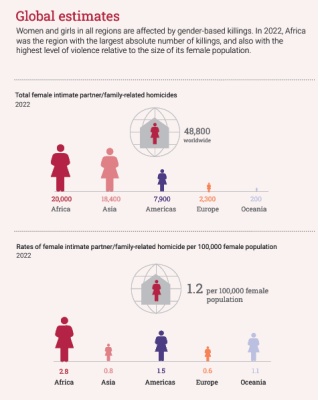
Source: The 2022 Femicide Report by UNODC and UN Women
That is why gender activism does not stop at saying, “This is tragic.”
It pushes for concrete action:
• Expanding victim protection infrastructure (shelters, support centers, counseling, legal aid)
• Improving post-reporting procedures (from investigation to protection orders and trial)
• Ensuring public intervention, rather than dismissing violence as a “private family matter”
• Strengthening perpetrator accountability systems (restraining orders, monitoring, intervention programs)
• Shifting awareness to treat violence not as an issue of “individual character,” but as a structural problem
If you would like to learn more about gender-based violence, please refer to the following article. ⇊ What is Gender-based Violence? |
―
There Aren’t Enough Women at the Table of Power
Making “Representation” a Right
―
At decision-making tables, women remain underrepresented.
According to UN Women and the Inter-Parliamentary Union (IPU) in Women in Politics 2023:
• Women make up 26.5% of national parliamentarians worldwide
• 22% of ministerial positions are held by women
• Less than 10% of heads of state or government are women
When women are underrepresented in positions of power, the rules that shape our lives are more likely to reflect only one side of experience.
That is why gender activism seeks to change the structures that keep women on the outside.
• Advocating for gender-equal representation in political parties, parliaments, and public institutions (through targets, standards, and formal systems)
• Monitoring recruitment, promotion, and appointment processes (addressing informal barriers and the “glass ceiling”)
• Recognizing and responding to hate and threats against women in politics as forms of political violence
• Challenging stereotypes such as “women don’t belong in politics” through public campaigns
In short, it is about turning one fundamental question into institutional change:
“Why are we not at the table where decisions about our lives are made?”

―
Activism to Make “Equal Pay for Equal Work” a Reality
Income Is Ultimately About Choice
―
According to the ILO (International Labour Organization) Global Wage Report, women earn on average about 20% less than men.
The gender pay gap is not just a matter of numbers.
It shapes the boundaries of life including education, housing, caregiving, and retirement.
And one important point:
Contrary to the belief that “growth will fix it over time,” the gap does not disappear automatically.
• In low-income countries, the gap is around 19%
• In high-income countries, it still remains in the low-to-mid teens
• Notably, in upper-middle-income countries, the gap can rise to the low 20% range
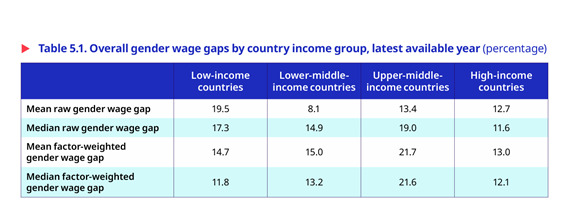
In fact, when weighted, the gender pay gap is highest in upper-middle-income countries, reaching around 21% — meaning men earn significantly more per hour than women.
That is why gender activism moves from awareness to action:
• Strengthening pay transparency (disclosing gender pay gaps, reporting systems)
• Reviewing hiring, evaluation, and promotion processes (eliminating invisible bias)
• Institutionalizing equal pay for work of equal value through job evaluation systems
• Revaluing essential work such as care, education, nursing, and service jobs so they are not treated merely as “good work,” but as economically recognized labor
If you would like to learn more about the global gender gap, please refer to the following article. ⇊ |
―
Activism for the Right to Be Safe Online
Refusing to Treat Digital Violence as “Something Minor”
―
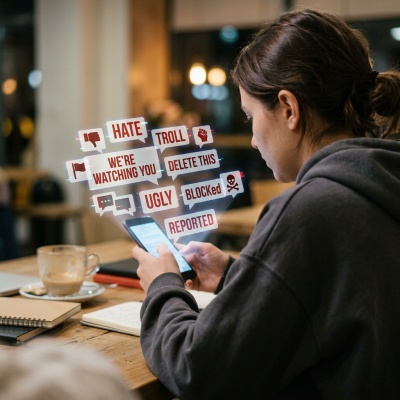
(This image is AI-generated.)
According to UN Women, online harassment, deepfakes, and non-consensual image sharing are not simply matters of personal discomfort, they are violations of rights.
Violence now begins on screens.
Deepfakes, cyberstalking, threatening messages, non-consensual distribution.
And what starts online often leads to real-world withdrawal and fear.
That is why gender activism works to establish rules in digital spaces as well.
• Strengthening monitoring and reporting systems for hate speech and harassment (including platform accountability)
• Demanding processes for detecting, removing, and preserving evidence of deepfakes
• Expanding access to victim support (counseling, legal aid, content removal, one-stop services)
• Advocating for stronger legal definitions, protections, and penalties for digital gender-based violence
―
Activism That Changes Systems
Laws Move Slowly, but They Are the Most Powerful Language of Change
―
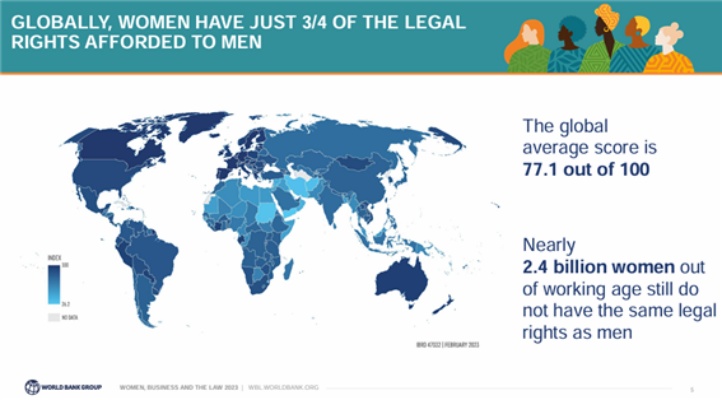
According to the Women, Business and the Law 2023 report, the global average score for gender equality in laws and institutions is 77.1 out of 100.
In other words, women are still not living under fully equal legal systems.
Source: World Bank
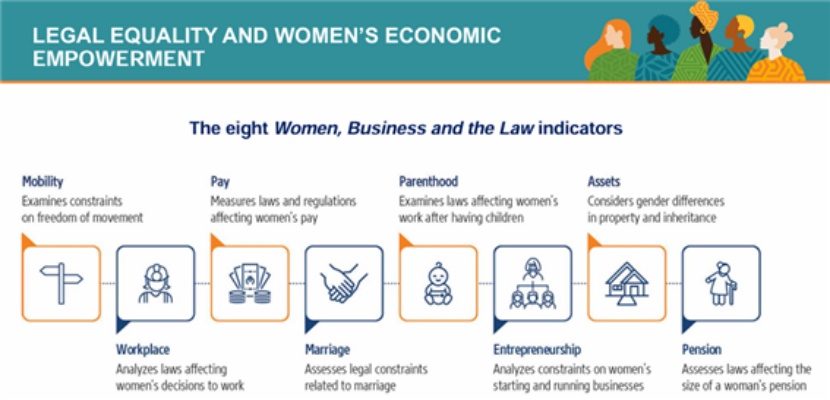
The World Bank tracks barriers to women’s economic participation across key areas:
• Mobility
• Workplace
• Pay
• Marriage
• Parenthood
• Entrepreneurship
• Assets
• Pension
Source: World Bank
What these indicators ultimately tell us is simple:
Women’s economic empowerment is not just a matter of individual ability.
It is shaped by the rules that societies create.
That is why gender activism does not stop at slogans in the streets.
It works to:
• Rewrite policies and legal language
• Redirect budgets and resources
• Hold institutions accountable
• Turn rights into lived reality
―
Gender Activism Is Ultimately the Language of Peace
“Peace with Women’s Participation Lasts Longer”
―
According to UN Women의 WPS(Women, Peace and Security) data, when women participate in peace processes:
• The likelihood that a peace agreement lasts at least 2 years increases by 20%
• The likelihood that it lasts 15 years increases by 35%
Gender activism is not just a human rights movement.
It is closer to a preventive system that helps stop societies from collapsing into violence.
As emphasized in UN Security Council Resolution 1325, women’s equal participation in conflict prevention, resolution, and peacebuilding is not an act of goodwill it is a necessary condition.
Because when issues like sexual violence, caregiving, displacement, and livelihoods are excluded from negotiation tables, peace is more likely to remain a paper agreement rather than a lived reality.
In the end, what gender activism builds is not simply safety for women, but the conditions for a sustainable and lasting peace for society as a whole.
―
What Can We Do?
“Start Small, But Make It Real”
―
We can begin by shifting today’s choices in a slightly more fair direction.
《Change the Direction of Where We Spend》
Where we buy, where we invest our time, and which companies we support, these choices shape society.
• Choose products from companies with inclusive hiring practices or social enterprises
• Take interest in ESG or impact investments that incorporate a gender perspective
• Explore internships or activities with nonprofits and social ventures focused on gender issues
《Connect Your Field to Gender Activism》
Using your own expertise to make the world a little less unequal.
That is the most practical form of gender activism.
• If you’re a developer:
Build reporting systems for online abuse, design safer platforms, or use data to detect risks
• If you’re a designer:
Create infographics or campaign visuals that make complex issues easier to understand
• If you study law or policy:
Identify discriminatory clauses, propose alternatives, and conduct legislative or policy research
• If you’re a content creator:
Avoid reproducing hate, and help shape narratives into rules that enable change
《One Thing You Can Do Today》
• Don’t ignore digital violence or hate speech—report, document, or raise awareness
• Share reliable sources (reports from international organizations or public institutions)
• Ask a simple question when you hear a “normal” joke:
“Why is that funny?”
―
A Sentence We Need to Rethink
“Within what we call ‘normal,’ are someone’s rights being erased?”
―
In the spaces we belong to, within the words, systems, and even jokes we take for granted are there rights that are quietly being erased?
We often forget that things we consider “light” — language, customs, humor, atmosphere can become conditions of life for someone else.
But those conditions can be changed.
When questions accumulate, they become standards.
When standards accumulate, they become rules.
Gender activism is not a declaration to overturn the entire world.
It is closer to a promise:
not to leave inequality as “just the way things are.”
And that promise, in ways we may not fully realize, protects and saves lives.
“Gender equality is the most reliable predictor of peace and prosperity.”
— António Guterres, Secretary-General of the United Nations
Written by Sharon Choi
Director of Planning
Sunhak Peace Prize Secretariat
Learn More: Reason for her Death: Improper Hijab What is Gender-based Violence? |
References & Sources Gender-Based Violence & Femicide • WHO. Violence against women prevalence estimates, 2018 : https://www.who.int/publications/i/item/WHO-SRH-21.6(세계보건기구) • UNODC & UN Women. Gender-related killings of women and girls (femicide/feminicide): Global estimates 2022 & Femicides in 2023 Women’s Political Participation & Representation • UN Women & IPU. Women in Politics: 2023 : https://www.unwomen.org/en/digital-library/publications/2023/03/women-in-politics-map-2023 : https://www.ipu.org/resources/publications/infographics/2023-03/women-in-politics-2023(UN Women·IPU) The Gender Pay Gap & The Economic Cost of Inequality • ILO. The gender pay gap(2024) & Global Wage Report : https://www.ilo.org/resource/other/gender-pay-gap • World Bank. Unrealized Potential: The High Cost of Gender Inequality in Earnings Laws, Institutions & Women’s Economic Participation • World Bank. Women, Business and the Law 2023 : https://wbl.worldbank.org/en/reports : https://wbl.worldbank.org/content/dam/sites/wbl/documents/2023/Executive%20Summary.pdf • UN Women. Equality in law for women and girls by 2030 Digital Gender-Based Violence & Online Safety • Plan International. State of the World’s Girls 2020: Free to Be Online? : https://plan-international.org/publications/free-to-be-online/ • UN Women. Digital violence is intensifying…(2025) • UNDP. Making Digital Spaces Safe: Global Action Against Online Gender-Based Violence Gender Equality, Peace & Security • United Nations. Women, Peace and Security : https://www.un.org/en/peace-and-security/page/women-peace-and-security • UN Women. What we do: Peace and security : https://www.unwomen.org/en/what-we-do/peace-and-security(UN Women) Global Gender Activism & Youth Leadership • Girl Up. Who We Are & 2024 Annual Impact Report |